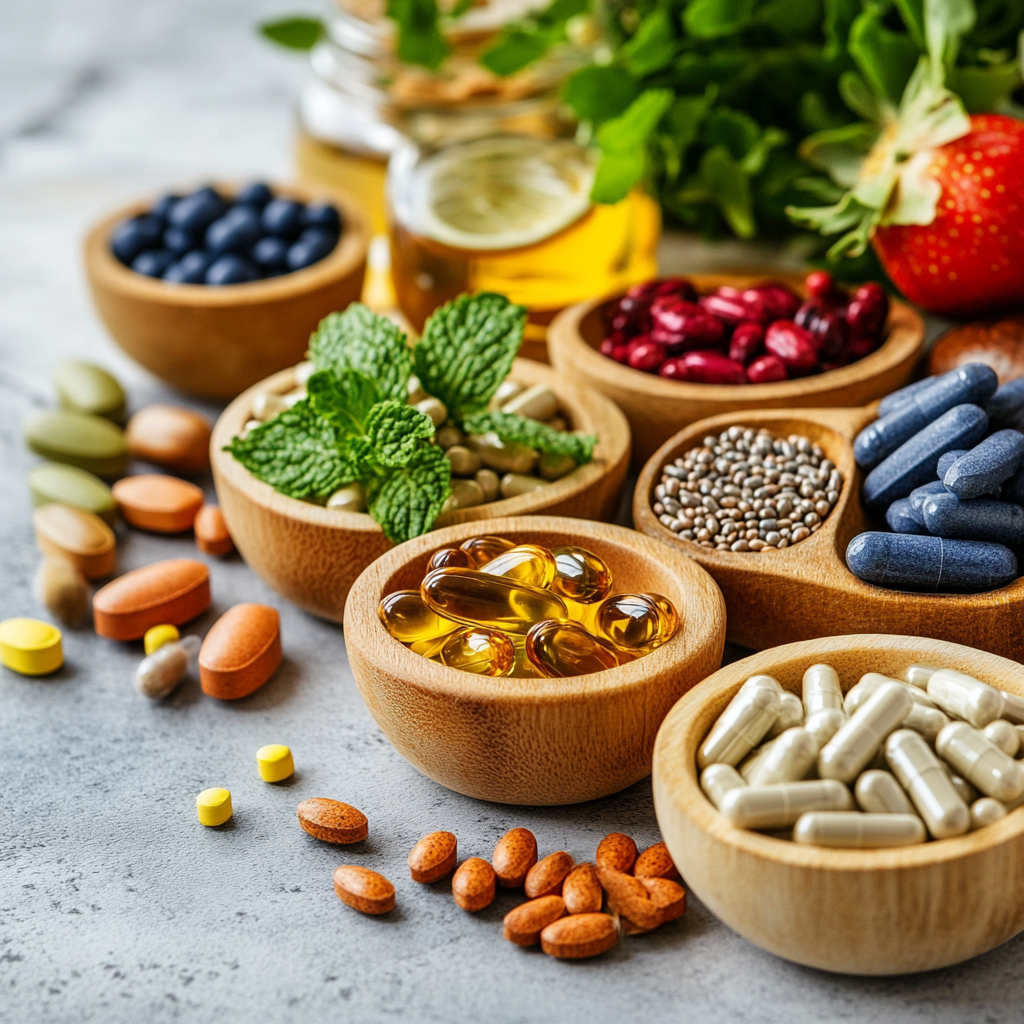
Walk into any pharmacy or health store, and you'll see shelves packed with dietary supplements – multivitamins, protein powders, herbal pills, 'superfood' capsules, and more. Supplements promise everything from filling nutritional gaps to boosting energy, building muscle, improving brainpower, or enhancing health in myriad ways. But which supplements actually deliver on those promises? And do you even need them if you eat a decent diet? In this article, we'll break down the basics of supplements: when they can be helpful, when they're likely unnecessary (or even risky), and how to approach supplementation in an informed, safe way.
The Role of Supplements in a Balanced Diet
By definition, supplements are products intended to add nutritional value to (supplement) the diet. They come in pills, capsules, powders, gummies, drinks, etc., and can include vitamins, minerals, amino acids, enzymes, herbs, or other botanicals. The idea is to help you get enough of a nutrient that you might be lacking or to provide a specific benefit (like fish oil for omega-3s or protein powder for muscle building).
It's important to state upfront: most nutrition and medical experts agree that your food should be your primary source of nutrients. A balanced diet rich in whole foods provides not just vitamins and minerals, but also fiber and countless phytonutrients that you can't replicate in a pill. For the average healthy adult, eating a variety of fruits, vegetables, whole grains, lean proteins, and healthy fats should cover your basic nutritional bases.
That said, supplements can be beneficial or necessary in certain situations:
- Nutrient Deficiencies: If a blood test shows you are deficient in a specific vitamin or mineral, a supplement can help correct that. Common ones include vitamin D (many people have low vitamin D, especially if they get little sun exposure), iron (particularly in menstruating women or those with anemia), vitamin B12 (especially for strict vegetarians/vegans or older adults who absorb B12 poorly), calcium (for those who don't consume dairy or have higher needs), and magnesium.
- Dietary Restrictions or Life Stages: Vegans, for example, should supplement B12 because it's not reliably available in plant foods. Pregnant women are advised to take prenatal vitamins (which include folic acid to prevent birth defects, iron for the mother's and baby's needs, etc.). Someone on a very low-calorie diet or with certain medical conditions that impair nutrient absorption might need supplementation to avoid deficiencies.
- Performance and Muscle Building: Athletes or those doing heavy training sometimes use protein powders or amino acid supplements to help meet higher protein needs for muscle repair. Creatine is a supplement with solid evidence for improving short bursts of high-intensity exercise and muscle gain in young adults.
- Bone Health/Older Age: Calcium and vitamin D supplements are often recommended for postmenopausal women or older adults to help preserve bone density (especially if dietary intake is low). Likewise, B12 supplementation is often recommended for older adults since absorption declines with age.
- Specific health goals: For instance, omega-3 fish oil capsules for people who don't eat fish (to support heart and brain health), or fiber supplements for those who have trouble getting enough fiber through food.
However, beyond these scenarios, a lot of supplements are marketed with less evidence to back them up. It's a huge industry, and not all claims are rigorously tested. Unlike prescription medications, most supplements are not required to prove effectiveness before being sold. They're regulated more like foods than drugs in many countries, meaning as long as they're deemed safe and are truthfully labeled, they can be sold – even if they ultimately do nothing beneficial.
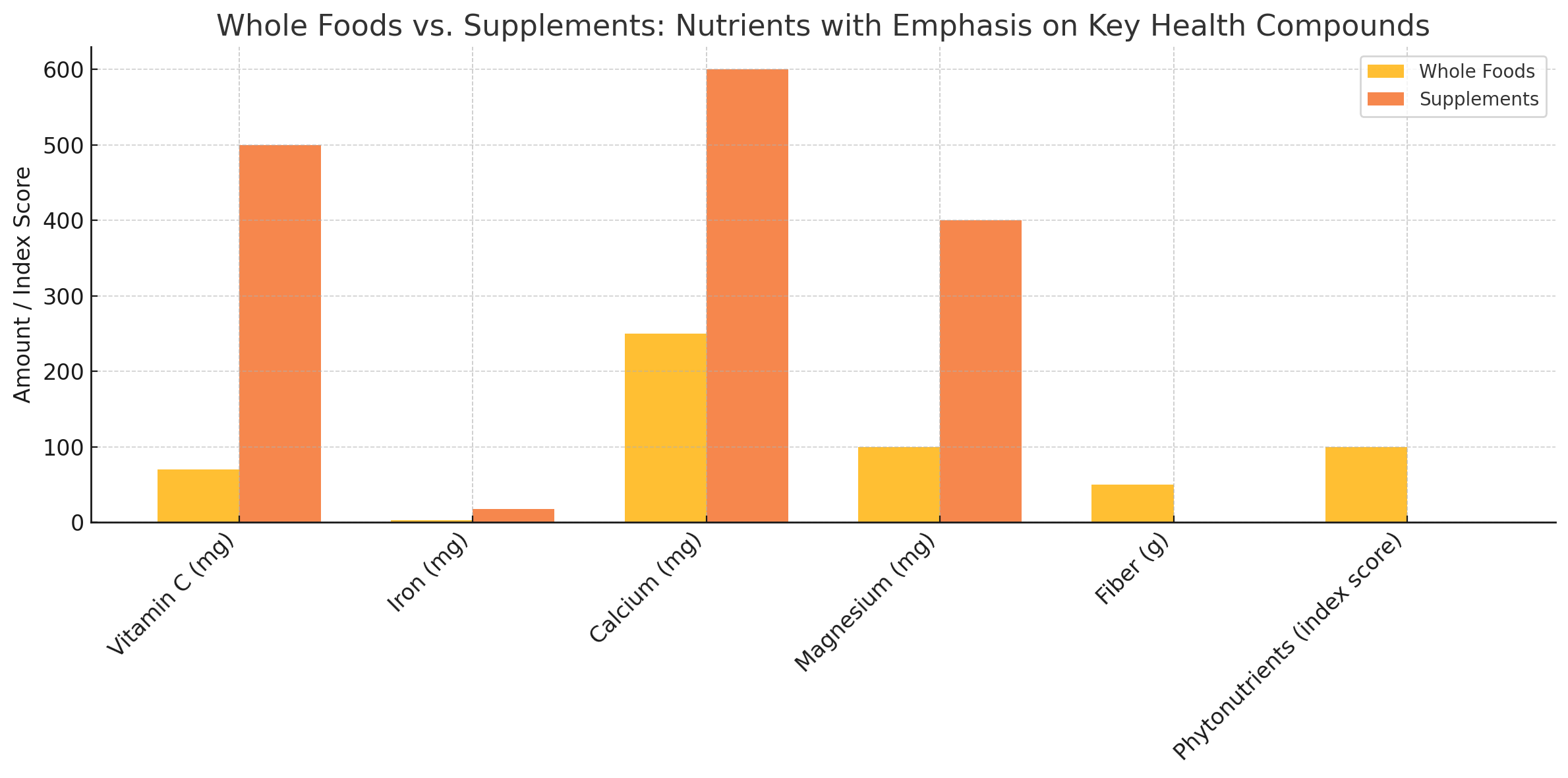 Whole foods provide nutrients plus fiber and phytonutrients that supplements can't replicate
What Works: Evidence-Backed Supplements
Let's highlight a few supplements that research supports for certain uses:
Multivitamins (with caveats):
- Multivitamins are probably the most common supplement. They contain a mix of various vitamins and minerals, usually at levels around 100% of daily needs (though some 'mega' formulas have more).
- The evidence on multivitamins is mixed. Large studies generally have not shown that a standard multivitamin prevents major diseases like heart disease or cancer in well-nourished populations.
- However, they might have modest benefits in certain groups – for example, a recent study suggested multivitamins could slightly slow cognitive aging in older adults, and people with suboptimal diets might fill some gaps with a multi.
- Overall, taking a basic multivitamin at the recommended dose is likely harmless (it provides nutrients in reasonable amounts, often below toxic levels), and it can act like an insurance policy, but it's not a magic bullet.
- It won't compensate for an unhealthy diet. If you do take one, choose a reputable brand and avoid super-dosed ones (more is not always better and can even be harmful in some cases).
Vitamin D:
- This is a star supplement because deficiency is common and vitamin D is hard to get from food (aside from fortified milk, fatty fish, or egg yolks).
- Your skin can make vitamin D from sun exposure, but if you live in northern latitudes, use sunscreen diligently, or have darker skin (which reduces D synthesis), you might be low.
- Vitamin D is crucial for bone health (helps calcium absorption) and there's research into its role in immune function, mood, and more.
- If a blood test shows low vitamin D, supplementation is advised. Many adults take 1000–2000 IU daily as a general measure, but higher doses might be needed to correct a deficiency initially (under medical guidance).
- It's one of those supplements that for many people does make a difference – e.g., preventing or treating mild deficiency symptoms like fatigue or frequent infections.
Omega-3 Fish Oil:
- Omega-3 fatty acids (EPA and DHA) found in fish oil have evidence for supporting heart health (like modestly lowering triglycerides) and possibly brain health.
- Eating fatty fish twice a week is the general recommendation. If you don't/can't eat fish, a fish oil supplement or algae-based omega-3 (for vegetarians) can help.
- Some studies found that fish oil supplementation can reduce risk of heart events in certain high-risk groups, although it's not a panacea.
- It's one of the more accepted supplements if your diet is low in omega-3s, but quality matters (fish oil can oxidize/go rancid, so choose a trusted brand).
Protein Supplements:
- For those who strength train or have higher protein needs, protein powders like whey, casein, or plant-based blends can be effective in building muscle when used along with exercise.
- They're essentially a convenient food – whey protein, for example, is derived from milk. These supplements 'work' in the sense that they provide essential amino acids to support muscle repair and growth.
- If you struggle to meet protein needs through whole food (due to appetite, convenience, or cost), a scoop of protein powder in a shake can help.
- They're not necessary if you eat enough protein from diet, but they can be useful and are generally safe. Just be mindful of additives or excess calories from some flavored versions.
Creatine:
- Creatine monohydrate is one of the most researched fitness supplements. It's been shown to increase muscle mass, strength, and high-intensity exercise performance (like lifting or sprinting).
- It basically helps your muscles generate quick energy. It's safe for healthy adults in recommended doses (5g/day is common) and also may have some cognitive benefits.
- Creatine can cause a bit of water retention in muscles (harmless) and isn't necessary for casual exercisers, but among evidence-backed options for athletes, it's a standout.
 Some supplements have solid research backing their benefits for specific uses
Other Evidenced Supplements:
- Melatonin: This hormone supplement can be effective for shifting sleep timing (like for jet lag or in circadian rhythm disorders) and for some people as a mild sleep aid. It's relatively safe short-term and appears low-risk in moderate doses.
- Probiotics: These contain beneficial bacteria intended to support your gut microbiome. Evidence is strain-specific – some are proven to help with certain conditions (like specific probiotics can help antibiotic-associated diarrhea or IBS symptoms), but not all probiotics are equal.
- Magnesium: Can aid sleep and muscle cramps in people who are deficient. Many people don't get enough magnesium from food, so supplementation can be beneficial for some.
- Fiber supplements: Can help people who have trouble getting enough fiber through food, supporting digestive health and potentially heart health.
"The key with supplements is evidence-based use for specific needs, not hoping for magic bullets. The most effective supplements address known deficiencies or support specific, measurable goals."
— Evidence-Based Nutrition Research
What Probably Doesn't Work (or Is Overhyped)
The supplement market is full of hype. Here are a few areas to be wary of:
Fat Burners and Weight Loss Pills:
- Many products claim to 'melt fat' or boost metabolism. The reality is, the majority of over-the-counter weight loss supplements have little evidence and some carry risks (stimulants that raise heart rate, etc.).
- If any weight loss occurs, it's usually minor unless the pill contains something essentially drug-like (which could be unsafe).
- Caffeine and green tea extract can mildly increase metabolism, but not enough to counter a poor diet.
- There's no magic bullet for weight loss – diet and exercise are key, possibly with medical interventions for some individuals (but those are prescription).
- Save your money and avoid most weight loss supplements, especially anything sounding too good to be true.
Muscle Gain Boosters (Beyond Protein/Creatine):
- Aside from adequate protein and creatine, a lot of muscle-building supplements are unproven.
- Branched-chain amino acids (BCAAs), for instance, are heavily marketed, but if you eat enough protein you likely get plenty of BCAAs in your diet – supplementing them hasn't shown added muscle benefit for most.
- Testosterone booster supplements (often herbal blends) generally do not have significant effects unless they contain actual hormones (which would be illegal).
- Be skeptical of proprietary 'anabolic' blends with mysterious ingredient lists and bold claims.
Superfood Powders and Detoxes:
- Things like powdered greens, fruit concentrates, or 'detox' teas and cleanses often promise to cleanse toxins or provide an antioxidant punch.
- While some powders might add a bit of vitamins/antioxidants, they usually aren't a substitute for whole fruits and veggies.
- Your body has organs (liver, kidneys) that detox itself – you don't need special juices or supplements to 'cleanse.'
- Some detox teas contain laxatives or diuretics which can be harmful with overuse.
- You're usually better off eating the real foods or taking specific vitamins if you have a deficiency.
Memory and Brain Enhancers:
- The market for nootropics or memory supplements (ginkgo biloba, various amino acids, etc.) is huge, but the evidence is spotty.
- Omega-3s and perhaps certain B vitamins (if deficient) can support brain health, but many over-the-counter brain boosters don't have robust support.
- If something really worked dramatically to improve memory or IQ, it'd be a huge deal – so approach these with skepticism.
- One exception: caffeine does acutely improve alertness and focus for most, but that's a well-known stimulant (just in your coffee or tea).
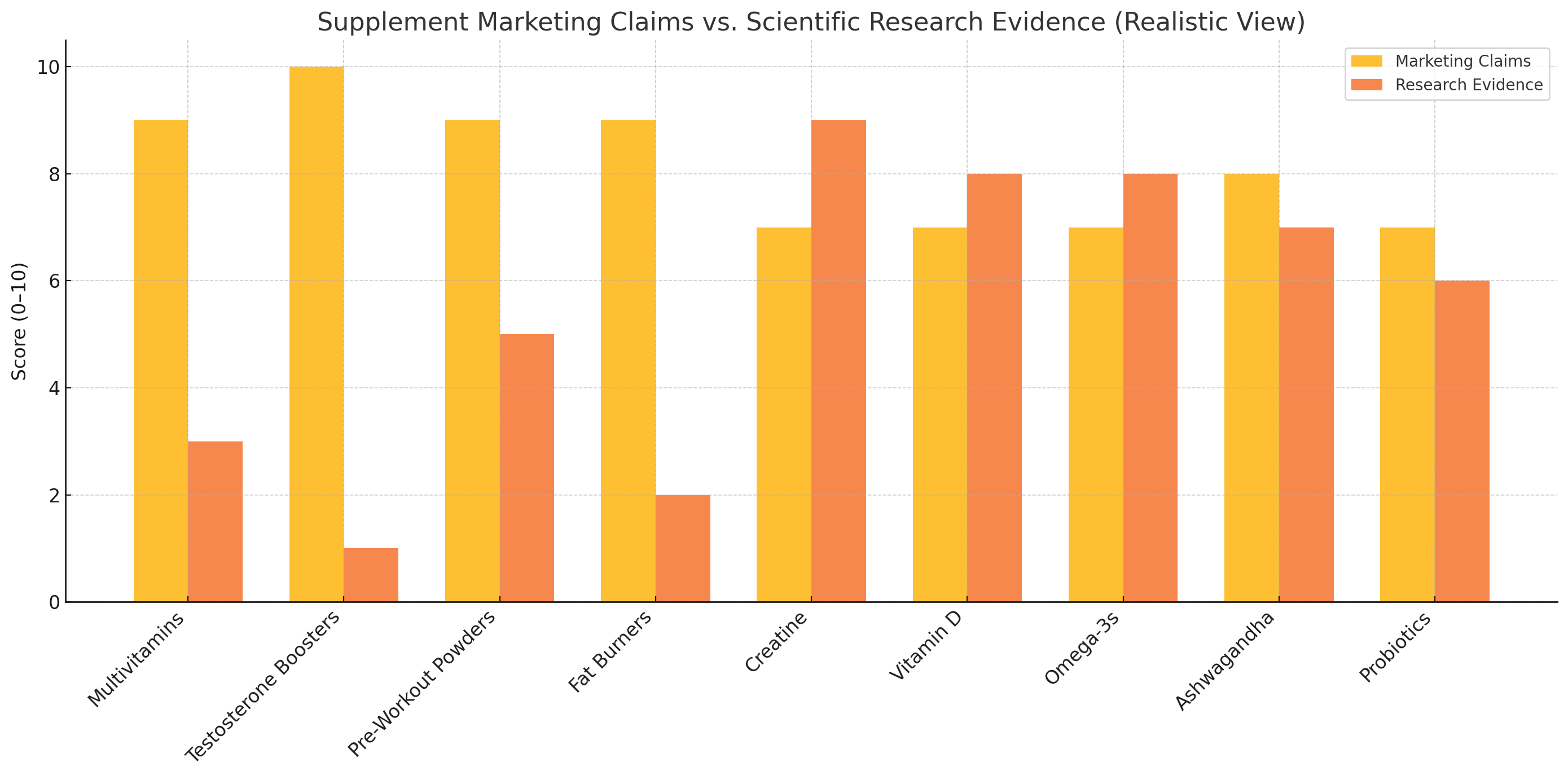 Many supplement claims are not supported by solid scientific evidence
Safety and Quality Considerations
If you decide to take supplements, safety is paramount:
Dosage Matters:
- More is not always better. Each vitamin/mineral has a Tolerable Upper Intake Level – for example, too much vitamin A can cause liver damage, too much vitamin B6 can cause nerve issues, excess iron is toxic, too much vitamin D can cause calcium imbalance.
- Stay within recommended doses unless a doctor prescribes higher for a deficiency. Be especially cautious with fat-soluble vitamins (A, D, E, K) and minerals – these can accumulate.
- Water-soluble ones (C and B vitamins) excess typically get eliminated in urine, but megadoses can still cause issues (e.g., very high C can upset stomach or cause kidney stones).
Supplement-Drug Interactions:
- If you're on medications, check for interactions. For instance, St. John's Wort (an herbal for depression) can reduce effectiveness of birth control pills and other medications.
- Calcium supplements can interfere with absorption of thyroid medication or certain antibiotics.
- Always inform your healthcare provider about any supplements you take, especially before surgeries or medical procedures.
Quality and Purity:
- Because regulation is less strict than for medications, some supplements may not contain what they claim, or they might be contaminated (e.g., protein powders with heavy metals, weight loss supplements spiked with drugs).
- Choose reputable brands, ideally those that have third-party testing (look for NSF, USP, or ConsumerLab seals that indicate the product has been tested for quality).
- Beware of buying supplements from questionable online sources or imports that might not follow safety standards.
- Read labels carefully and be wary of products with long lists of unrecognizable ingredients.
Listen to Your Body:
- If you start a new supplement and notice adverse effects (nausea, headaches, allergic reactions, etc.), stop taking it and consult a doctor if needed.
- For example, some people feel flushed with niacin, or upset stomach with iron. Don't just ignore side effects.
- Pay attention to how you feel overall – supplements should make you feel better, not worse.
"Supplements are not a cure-all. Serious health conditions should be managed with medical care. Don't rely on a supplement to treat something like a chronic disease without professional advice."
— Medical Safety Guidelines
Making Informed Choices
The best approach to supplements is an informed and targeted one:
Steps for Smart Supplementation:
-
- Assess your diet and needs. Are you possibly low in any nutrient (e.g., you don't eat much dairy – calcium might be of concern; you live in a low-sun area – vitamin D could help)? Do you have a health goal that diet alone isn't meeting?
-
- Look at evidence from credible sources. Before buying, search for information from reputable websites (like NIH Office of Dietary Supplements, examine.com which compiles research on supplements, or talk to a dietitian/doctor). See if studies back the supplement for your specific use.
-
- Choose one change at a time. If you start taking five new supplements and feel better (or worse), it's hard to know which is doing what. Introduce one, see how it goes for a few weeks, then consider another if needed.
-
- Monitor results. If you're taking something for a tangible reason (like magnesium for muscle cramps or melatonin for sleep), evaluate if it's helping. If not, don't continue indefinitely just because.
-
- Don't forget lifestyle. Supplements cannot override poor diet, lack of exercise, or inadequate sleep. They supplement; they don't replace healthy habits.
 A systematic approach helps you make informed supplement decisions
Special Considerations by Life Stage
Different life stages and circumstances may warrant different approaches to supplementation:
Children and Teens:
- Most children eating a varied diet don't need supplements, but some may benefit from vitamin D, especially in northern climates or if they have limited sun exposure.
- Picky eaters might benefit from a children's multivitamin, but focus should be on improving diet variety.
- Iron deficiency can occur in adolescent girls due to menstruation, so monitoring and possible supplementation may be needed.
Pregnant and Breastfeeding Women:
- Prenatal vitamins are widely recommended and contain folic acid (crucial for preventing birth defects), iron, and other nutrients needed during pregnancy.
- Omega-3 supplements (specifically DHA) support fetal brain development.
- Continue vitamin D and other supplements as recommended by your healthcare provider throughout pregnancy and breastfeeding.
Older Adults:
- Vitamin B12 absorption decreases with age, so supplementation is often recommended for adults over 50.
- Calcium and vitamin D become more important for bone health as we age.
- Protein needs may be higher in older adults to prevent muscle loss, so protein supplements might be beneficial for some.
Athletes and Active Individuals:
- Protein supplements can help meet higher protein needs for muscle recovery and growth.
- Creatine is well-supported for high-intensity training.
- Electrolyte replacement may be needed for endurance athletes or those training in hot conditions.
- Iron levels should be monitored, especially in female endurance athletes.
The Bottom Line on Supplement Quality
When choosing supplements, quality matters more than quantity. Here are key factors to consider:
What to Look For:
- Third-party testing certifications (USP, NSF, ConsumerLab)
- Clear, accurate labeling with specific amounts of active ingredients
- Reputable manufacturers with good track records
- Appropriate dosing (not mega-doses unless medically indicated)
- Expiration dates and proper storage instructions
- Minimal unnecessary additives, fillers, or allergens
Red Flags to Avoid:
- Products making dramatic health claims or promising to cure diseases
- Supplements sold only through MLM schemes or aggressive marketing
- Products with proprietary blends that don't list specific amounts
- Extremely cheap supplements from unknown sources
- Products marketed as 'natural steroids' or 'pharmaceutical alternatives'
- Supplements with unrealistic before/after photos or testimonials
Final Thoughts
Supplements can be a helpful part of your health toolkit, but they should be used thoughtfully. When used appropriately – such as correcting a known deficiency or providing a boost in specific circumstances – they can improve health and performance. However, they are not a silver bullet and the industry's marketing can overstate their benefits.
Quality and personalization matter. What's right for one person might be unnecessary for another. Always consider safety and evidence. When in doubt, consult a healthcare provider who understands nutrition; they can order labs or give advice based on your individual situation.
In summary, get most of your nutrients from a rainbow of whole foods first. Identify if there are any gaps or goals that supplements could help with, then choose high-quality products to fill those gaps. Respect the dosage, and keep it simple. With that approach, supplements can indeed 'supplement' a healthy lifestyle – but remember, they are just one small part of the big health picture.
"The best supplement is a consistently healthy diet. Everything else should be targeted, evidence-based, and used to fill specific gaps or meet particular needs."
— Integrative Nutrition Institute