Ever notice how you get sleepy around the same time each night or maybe feel a slump in the afternoon? Or perhaps you're a 'morning lark' bouncing out of bed at dawn, while your friend is a 'night owl' who hits their stride after sunset. These patterns are influenced by your circadian rhythm, often referred to as your body's internal clock.
In this article, we'll demystify circadian rhythms – what they are, why they matter for your health, and how you can work with your body clock (instead of against it) to feel your best.
What Is a Circadian Rhythm?
A circadian rhythm is a natural, internal process that regulates the sleep-wake cycle and repeats roughly every 24 hours. Think of it as an internal clock that cycles between sleepiness and alertness at regular intervals. It's not just about sleep, though – circadian rhythms also influence hormone release, body temperature, digestion, and other bodily functions over the course of a day.
The primary circadian rhythm in humans is the sleep-wake cycle, which is controlled by a part of the brain called the suprachiasmatic nucleus (SCN), located in the hypothalamus. The SCN is like a master clock that keeps time based on environmental cues, the most important of which is light. In the morning, exposure to daylight signals the SCN to trigger alertness and bodily functions for activity. In the evening, as light diminishes, the SCN cues the release of melatonin, the hormone that promotes sleep, making you feel drowsy.
Everyone's circadian rhythm is slightly different, which is why some people naturally wake up early and others feel more energetic later. Genetics play a role in whether you're predisposed to be a morning person or night person. Age is also a factor – teenagers, for instance, often have a slightly shifted rhythm that makes them prone to staying up later and sleeping in later (this is biological, not just lifestyle). Older adults may find their rhythms shift earlier again.
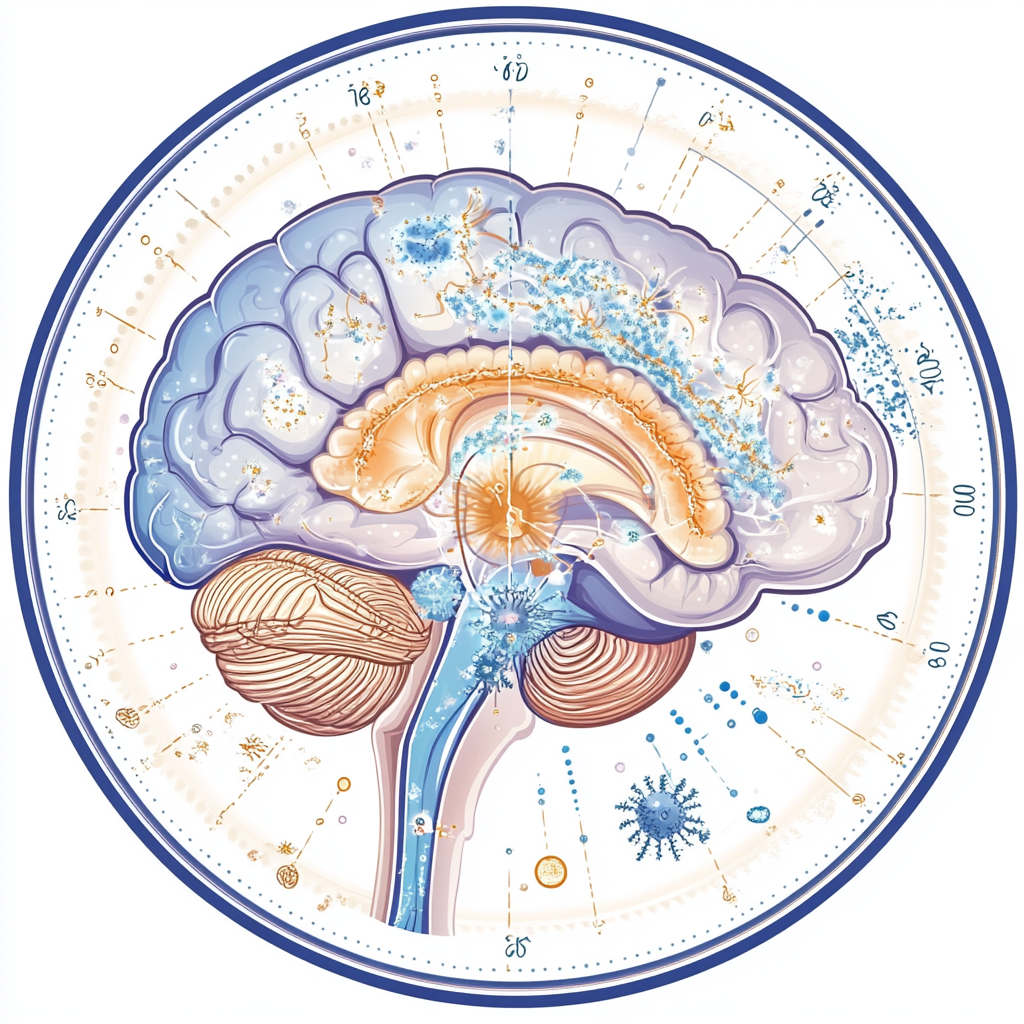 The suprachiasmatic nucleus acts as your body's master clock
Why Circadian Rhythm Matters for Your Health
When your lifestyle is aligned with your circadian rhythm – meaning you sleep, wake, and eat at times that sync up with your body's clock – you tend to function at your best. However, modern life often throws curveballs at our circadian rhythms. Think of shift workers who have to stay awake at night, or anyone who's pulled an all-nighter or traveled across time zones. When we disrupt our natural rhythms, we can experience a range of negative effects:
Effects of Disrupted Circadian Rhythms:
- Sleep problems: If you're trying to sleep at an odd time according to your internal clock, you might struggle with insomnia or poor-quality sleep
- Reduced cognitive function: Misaligned circadian rhythms can impair your alertness and concentration. You've probably felt that foggy, jet-lag feeling when your internal clock is out of sync
- Mood disturbances: There's a reason we tend to feel brighter and more positive on days when we're well-rested and in sync with the day-night cycle
- Metabolic and heart health: Research has shown that when we eat and sleep at inconsistent times, it can negatively impact metabolism and cardiovascular health. One striking study found that failing to stick to regular sleep times – even if total sleep duration is adequate – was associated with higher risks of heart disease events like stroke and heart attacks
In contrast, honoring your circadian rhythm can confer many benefits. Your energy levels will likely be higher and more stable if you sleep and wake in line with your internal clock. You may find your workouts feel easier or more productive at certain times of day (many people have peak physical performance in late afternoon when body temperature is highest, for instance). Even medications can work differently depending on the time of day – a field called chronotherapy looks at optimizing treatment timing according to circadian rhythms.
Common Disruptors of Circadian Rhythm
Our 24/7 society presents a few major challenges to maintaining a healthy circadian rhythm:
Artificial Light at Night:
- Before electricity, people's sleep-wake rhythms were more tightly linked to sunrise and sunset. Now, we extend our days with electric lighting and tons of screen time
- Blue light from LEDs, phones, and computer screens is particularly potent at tricking the brain into thinking it's daytime, suppressing melatonin release
- Late-night exposure to bright light can push your sleep time later and disturb your rhythm
Inconsistent Schedules:
- Irregular daily schedules are tough on the circadian system. If you go to bed at 10 p.m. on weekdays but at 2 a.m. on weekends, you're essentially giving yourself a mild case of 'social jet lag' every week
- Your body clock doesn't know which schedule to stick to. Shift work, especially rotating shifts (days to nights and vice versa), is an extreme example
- It forces the circadian rhythm into constant catch-up mode
Time Zone Travel (Jet Lag):
- Flying across time zones rapidly forces you into a different external schedule while your internal clock is still on the old time
- The fatigue, insomnia, and disorientation of jet lag can be considered a temporary circadian rhythm disorder
- Eventually, your body clock resets to the new time, but it can take a few days (roughly one day per time zone crossed is a rule of thumb for recovery)
 Morning light exposure is crucial for maintaining healthy circadian rhythms
Tips to Align with Your Circadian Rhythm
While we can't always control our schedules perfectly, there are ways to strengthen and work with your body's natural rhythm:
Get Bright Light in the Morning:
- Exposing yourself to sunlight in the first hour or two after waking is one of the best ways to anchor your circadian rhythm
- Open your curtains, have your coffee on the porch, or take a quick walk outside
- If natural light is hard to get (say, in winter or if you wake before sunrise), consider a light therapy box that provides broad-spectrum light
- Morning light exposure helps you feel alert sooner and also sets a timer of sorts in your brain to feel sleepy roughly 14-16 hours later
Dim the Lights in the Evening:
- As bedtime approaches, create a dusk-like atmosphere. Dim or turn off unnecessary lights at home, and avoid screens or use blue-light blocking modes/glasses
- Warm, low-intensity lighting (like lamps with yellow-orange hues) is more circadian-friendly in the evening
- These practices cue your brain to start producing melatonin on schedule, so by the time you go to bed you're physiologically ready for sleep
Keep a Consistent Sleep Schedule:
- Try to have a regular bedtime and wake time at least for 5-6 days of the week. If you love sleeping in on weekends, limit it to an hour or so beyond your usual time
- The more regular your schedule, the more robust and predictable your circadian rhythm will be
- This consistency also means you'll probably notice you start waking up without an alarm and getting sleepy around the same time nightly – signs your circadian clock is in good shape
Be Smart About Shift Work or All-Nighters:
- If you do work night shifts, some strategies can help. Use bright light in your work environment at night to trick your body into alertness, and wear dark sunglasses on the commute home in daylight to prevent your body clock from getting confused
- Once home, make your bedroom as dark as possible for daytime sleep (blackout curtains, eye mask, etc.)
- Some night workers even find it helps to stick to a 'night schedule' on days off (at least partially) to maintain a rhythm
- If you have to pull an all-nighter or travel, short naps (20-30 minutes) can help you recharge without throwing off your schedule too much
Time Your Meals Wisely:
- Emerging research in chrononutrition suggests that when you eat can influence circadian rhythms and metabolism
- Eating heavy meals late at night can confuse your body's metabolic clock (which expects to be more idle during the night)
- Try to eat your main meals during daylight or at least earlier in the evening
- Some people find that a consistent meal schedule (like breakfast around 7 a.m., lunch at noon, dinner at 7 p.m. daily) helps them feel more energetically balanced
- If you work odd hours, try to adapt your meal timing to when you're active and give your digestive system a routine
Listening to Your Body Clock
A big part of aligning with your circadian rhythm is simply self-awareness. Notice your natural patterns. When do you feel most alert? When do you feel the most draggy? For example, many people have a normal dip in alertness in the early afternoon (often 1–3 p.m.) – that's part of a biphasic sleep tendency in human biology. If you can, doing a brief activity break or a 20-minute power nap during that window can recharge you, rather than reaching for another coffee which might disrupt nighttime sleep.
Also, respect your body's signals. Lying in bed yawning at 10 p.m. but forcing yourself to stay up to watch another episode? It might seem trivial, but repeatedly pushing past your natural 'sleep window' can lead to insomnia (you get a second wind and then can't fall asleep when you finally go to bed). If you notice you get sleepy at 10 p.m. most nights, start winding down around 9:30 so you can hit the pillow by 10. On the other hand, if you're a night owl who only gets sleepy at midnight, don't try to force a 9 p.m. bedtime – you'll just toss and turn. Instead, gradually adjust your schedule if needed, or find ways to make a later schedule work for you (as long as you still get enough total sleep).
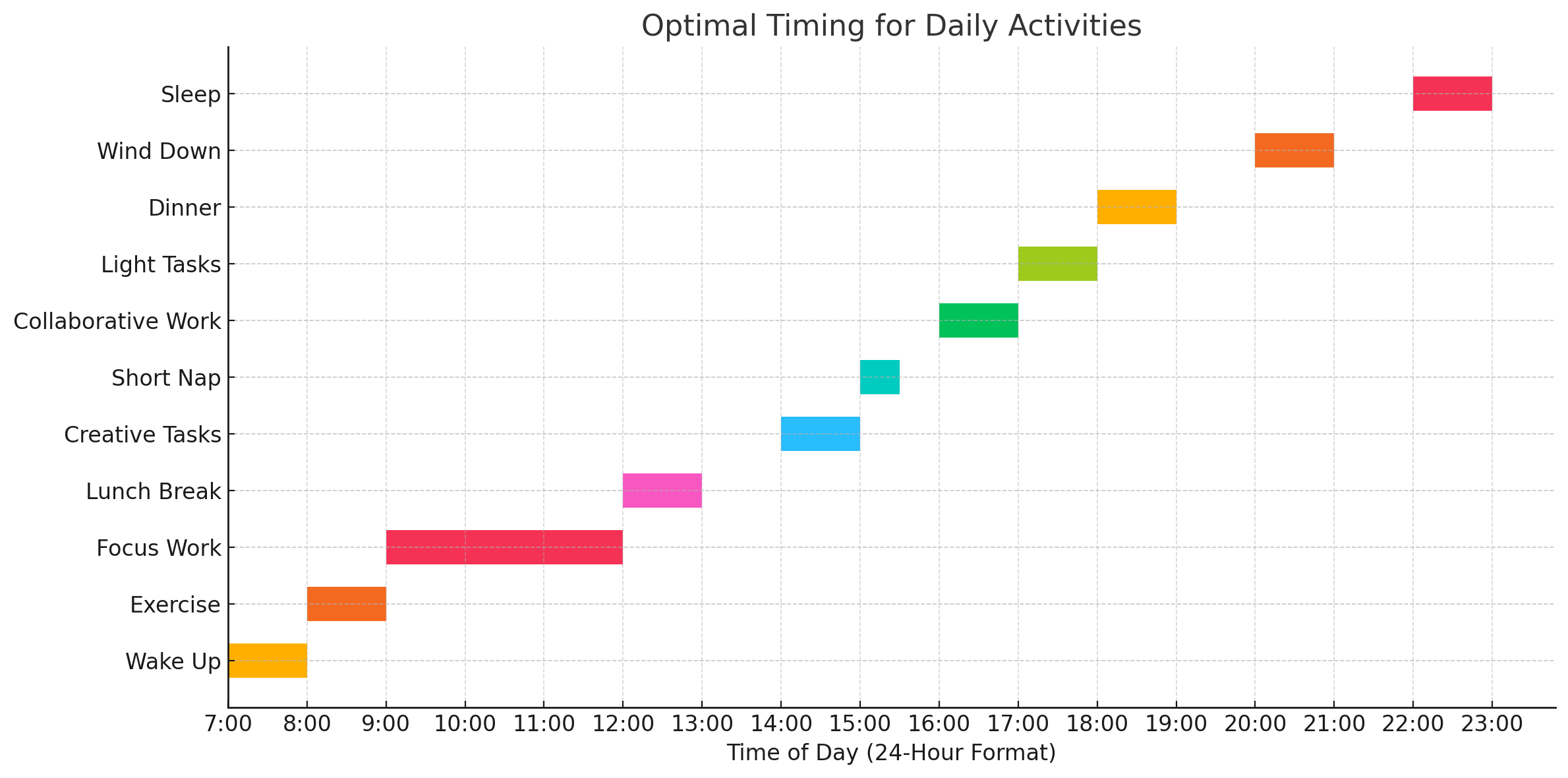 Understanding your natural rhythm helps optimize daily activities
When Circadian Rhythms Go Awry
Some people suffer from specific circadian rhythm disorders. For instance, Delayed Sleep Phase Syndrome (DSPS) is when a person's internal clock is significantly shifted later – they can't fall asleep until very late (e.g., 3 a.m.) and struggle to wake up in the morning. This is more common in teens and young adults.
The opposite, Advanced Sleep Phase Syndrome, is when someone gets very sleepy in the early evening (like 6–7 p.m.) and wakes up very early (3–4 a.m.) – more often seen in older adults. There's also Non-24-Hour Sleep-Wake Disorder, which often affects totally blind individuals who lack light perception; their body clock might run longer than 24 hours and 'free run,' causing sleep times to shift a bit later each day.
The treatment for many of these conditions involves strategic timing of light exposure and sometimes melatonin supplements. For example, someone with DSPS might use bright light therapy in the mornings and take a low dose of melatonin in the evening to shift their clock earlier. Those with non-24 might benefit from carefully timed melatonin to impose a 24-hour rhythm. If you suspect a true circadian disorder (your sleep timing issues are severe and persistent), it's worth consulting a sleep specialist who can guide you through these therapies.
"Living in sync with your circadian rhythm as much as possible can lead to better sleep, more consistent energy levels, and overall improved health. It's about working with your biology."
— Circadian Biology Research
Embrace the Rhythm
Living in sync with your circadian rhythm as much as possible can lead to better sleep, more consistent energy levels, and overall improved health. It's about working with your biology. While we can't always dictate our schedules, even small changes – like getting morning sunlight or keeping a steady bedtime – can yield benefits. Think of your body like a finely tuned clock: it needs regular cues and care to keep ticking smoothly.
By understanding and respecting your internal clock, you set the stage for more restorative sleep at night and more vibrant wakefulness during the day. So, whether you're a night owl, a morning lark, or something in between, pay attention to your rhythms. Make gradual adjustments if you need to shift them, and optimize your environment and habits to reinforce the pattern that makes you feel best. Your body and mind will thank you for the harmony.